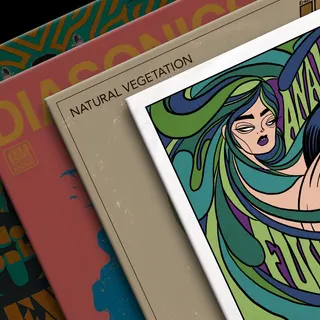
Funk
James Brown changed everything when he started screaming "give the drummer some" and putting bass on the one. Funk didn't emerge gradually. It arrived fully formed in the mid-1960s when rhythm sections stopped supporting melodies and became the entire point. The groove was the song. Everything else existed to serve that pocket.
Listen to The Meters, and you'll hear how much space matters. Gaps between notes create tension. Syncopation makes bodies move involuntarily. Horn sections punch rather than sustain. Basslines walk with attitude. Drummers like Clyde Stubblefield and Jabo Starks created breaks that hip-hop would loop for eternity. Funk samples from the golden era remain the most sampled recordings in music history because those grooves simply can't be programmed. Human musicians locking into a pocket together produce something algorithms still can't replicate.
The genre split into different schools. New Orleans had The Meters' stripped-down swagger. Ohio Players brought horn arrangements and explicit album covers. Earth, Wind & Fire added cosmic philosophy and pristine production. Kool & the Gang moved from raw jazz-funk to polished disco-funk. Funk guitar samples and funk vocal samples carried the DNA forward even as synthesizers replaced some live instrumentation, with acts maintaining that rhythmic foundation underneath new technology.
Browse our collection, and you'll find artists like Jefferson Ink, The Fabulous Counts, and Syndicate alongside deeper cuts from international funk scenes. Tanika Charles represents the genre's contemporary continuation, while tracks from Ahmed Malek show how funk translated across cultures. Stems available on select recordings let you isolate those specific drum breaks or bass pockets. Funk samples remain the foundation because the groove always matters most.
- Parent genre
- R&B / Soul