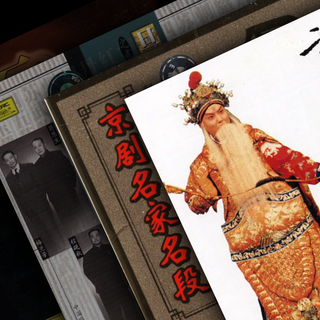
Beijing Opera
Beijing Opera developed its own musical language over three centuries, where percussion patterns signaled specific actions and vocal techniques required years of training to master. Performers didn't just sing. They used falsetto, rapid vibrato, and stylized pronunciation to embody character types, warriors, scholars, women, and clowns, each with distinct vocal approaches that audiences recognized instantly.
The instrumental ensemble centers around the jinghu, a two-stringed fiddle with piercing tone that cuts through percussion sections. Gongs, cymbals, drums, and wooden clappers don't provide rhythm alone. They communicate. Specific drum patterns (luogu jing) announce entrances, battles, emotional shifts. A particular sequence of strikes tells the audience a character is walking, thinking, or preparing for combat, creating a percussive vocabulary that Western orchestras never attempted.
Classical samples from Beijing Opera recordings offer textures that exist nowhere else in recorded music. The jinghu's aggressive, nasal timbre works against expectations of what strings should sound like. Vocal passages push into registers that feel deliberately unnatural, prioritizing dramatic impact over smoothness. Those massive gong crashes and the specific resonance of Chinese percussion instruments provide attack and decay characteristics that sample libraries rarely capture.
Productions from the 1950s through 1980s caught the art form at technical peaks, with state-supported troupes performing repertoire refined over generations. These recordings preserve performances where every vocal ornament and percussion hit carried specific meaning within a complete theatrical system. When you need drama that operates by entirely different rules than Western composition, these sessions deliver sonic elements that immediately stand out in modern contexts.
- Parent genre
- Classical
- Related genres
- Ballet MusicCantonese OperaHuangmei OperaMarch