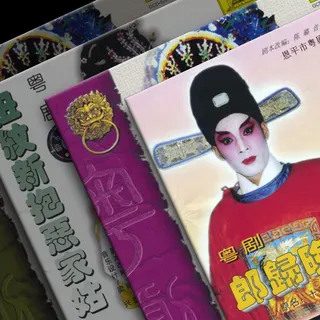
Cantonese Opera
Cantonese Opera emerged from Southern China's theatrical traditions, developing its own musical vocabulary distinct from Beijing Opera's northern approach. The vocal style favors a more melodic, less percussive delivery, with performers using naturalistic speech patterns from the Cantonese language to shape their singing. Where Beijing Opera prioritized symbolic gestures and formalized movement, Cantonese Opera leaned into storytelling and emotional expression that connected directly with regional audiences.
The instrumental ensemble centers around the gaohu, a two-stringed fiddle tuned higher than its northern counterpart, giving Cantonese Opera its characteristic bright, singing tone. Yangqin (hammered dulcimer) adds percussive melody, while various flutes, lutes, and traditional percussion instruments create layered textures that support rather than dominate the vocals. The music moves fluidly between speech and song, with performers shifting registers to match dramatic moments.
Classical samples from Cantonese Opera recordings capture a tradition that balanced accessibility with technical sophistication. The vocal ornaments, instrumental interludes, and specific timbral qualities of Southern Chinese instruments provide sonic elements that operate outside Western classical frameworks. Recordings from the mid-20th century preserve performances by legendary troupes before modern amplification changed how the art form sounded in theaters.
These sessions offer percussion patterns, string textures, and vocal techniques that bring immediate regional character to productions. When you need authentic Chinese musical elements that carry both historical weight and dramatic energy, Cantonese Opera delivers materials shaped by centuries of refinement.
- Parent genre
- Classical
- Related genres
- Ballet MusicBeijing OperaHuangmei OperaMarch