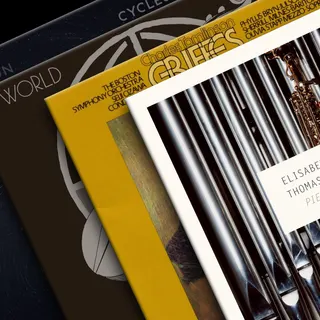
Modern Classical
Modern classical composition abandoned the certainties that governed music for centuries. Minimalists like Philip Glass and Steve Reich built entire works from repeating patterns that shifted gradually. Experimental composers pursued atonality, prepared pianos, and electronic manipulation. Others bridged gaps, writing for traditional orchestras while incorporating jazz harmonies, world music influences, or tape loops.
The recordings in our catalog capture this diversity through library music composers who worked during modern classical's peak creative period. Fabio Borgazzi's string arrangements demonstrate how film and television composers absorbed modernist techniques while maintaining accessibility. Maria Augusta Bruni's dramatic works show the influence of mid-century European experimentalism. Denver Oldham's compositions explore the space between traditional notation and improvisatory freedom.
Modern classical samples offer textures that sit outside conventional harmonic expectations. Dissonant string clusters, unconventional instrumental techniques, and rhythmic complexity that rejects easy categorization—all of this appears across recordings from the 1960s through 1980s. Carlo Savina's sessions provide lush orchestration with a modernist edge. Giorgio Stefano Oddoini and Franco Zauli explored darker territories where beauty emerged from tension rather than resolution.
Classical samples from this era carry production aesthetics that differ from earlier periods. Recording technology had advanced enough to capture nuanced performances, but engineers hadn't yet smoothed everything into digital perfection. You hear room ambience, slight imperfections in tuning, and the specific character of analog tape saturation that gives these performances warmth and presence impossible to recreate through synthesis alone.
- Parent genre
- Classical
- Related genres
- Ballet MusicBeijing OperaCantonese OperaHuangmei Opera